
Articles
Architecture
December 30, 2025


The biggest shift we saw this year wasn’t better AI. It was a change in what people actually want from it.
Early on, the focus was on generation. More options. Faster output. Everything automated. But in practice, that’s not where the bottleneck is. What people are really looking for is control. Not better proposals, but a better way to get there.
Instead of ending 2025 by listing achievements, we’re taking the opportunity to share the lessons shaped by this insight. We’re sharing what broke, what worked, and what changed over the course of 2025.
A number of assumptions were quietly tested. Some of them didn’t hold up particularly well once constraints, stakeholders, and real decision-making entered the picture.
In practice, several patterns emerged:
Overall, automation without structure and transparency created fragility rather than clarity.

Across teams and project contexts, a set of patterns consistently proved useful. These patterns were not tied to specific features or technologies, but to how work was structured and supported in practice.
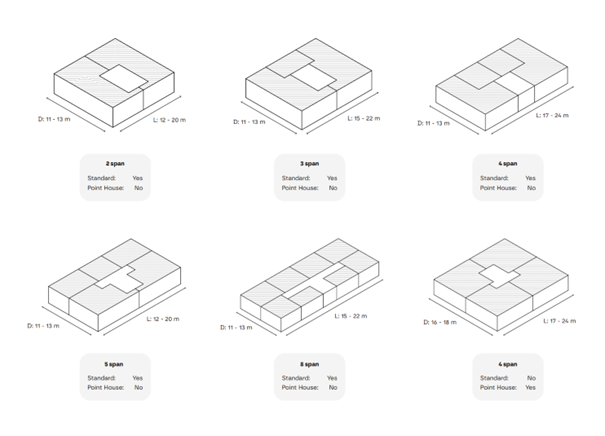
Structured data, clear typologies, and well-designed libraries are what make results understandable, comparable, and usable. Without a solid data model, it doesn’t matter how advanced the generation is.
Early-stage planning in Hektar quietly shifted away from open-ended design exploration. Instead, it became about control and workflow support across multiple scales, using structured but lightweight representations.
The goal moved from design exploration to design support.
Much of our work this year focused on building the foundation: the data model, structure, and logic that enable iteration, comparison, and further development.
That foundation enables:
This will be our focus in 2026. Without structure, AI adds noise. With structure, it adds leverage.
To learn more, visit our website, Hektar, or contact our team.


