
Articles
Urban Development
February 26, 2026

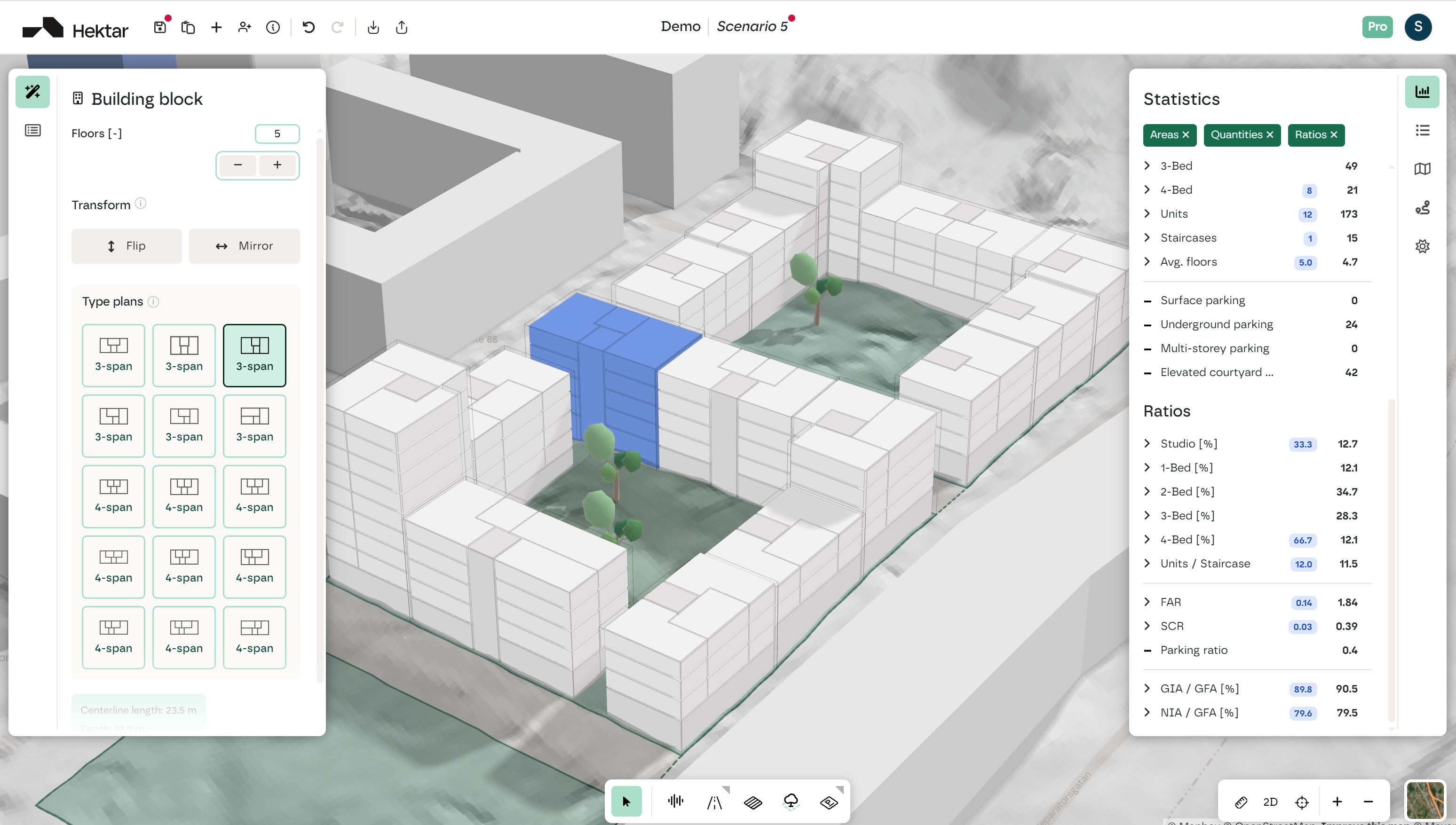

This article explains what early-stage feasibility in real estate development is, why traditional tools fall short, and how generative approaches like Hektar address key challenges.
Real estate projects don ot fail in construction. They fail in assumptions.
Long before drawings are detailed, before consultants are hired, and before capital is committed, a developer makes a series of early decisions that determine:
This phase is called early-stagefeasibility. It is also the least structured part of the entire development process.
In most projects,feasibility starts with:
From there, teams typically:
This process is slow and path-dependent.
Once a concept direction is chosen, alternatives are rarely explored deeply.
The result? Suboptimaldensity. Missed upside. Hidden risk.
Early-stage feasibility is not about detailed architecture.
It is about testing spatial and financial assumptions quickly beforecapitalis locked in.
Mostsoftware in the AECstack is optimized for:
They arenot built for:
This creates a gap.
Developers and architects often rely on spreadsheets plus manual CAD modeling.
That combination is powerful but slow.
And speed matters at this stage - because early-stagedevelopment is episodic.
Projects appear when land, mandate, and opportunity align. When that moment comes, decisions must happen fast.
A functional early-stage feasibility workflow should enable:
This is fundamentally different from detailed BIM design. It is closer to a feasibility iteration engine than to a drafting tool. See example from Eslöv Municipality
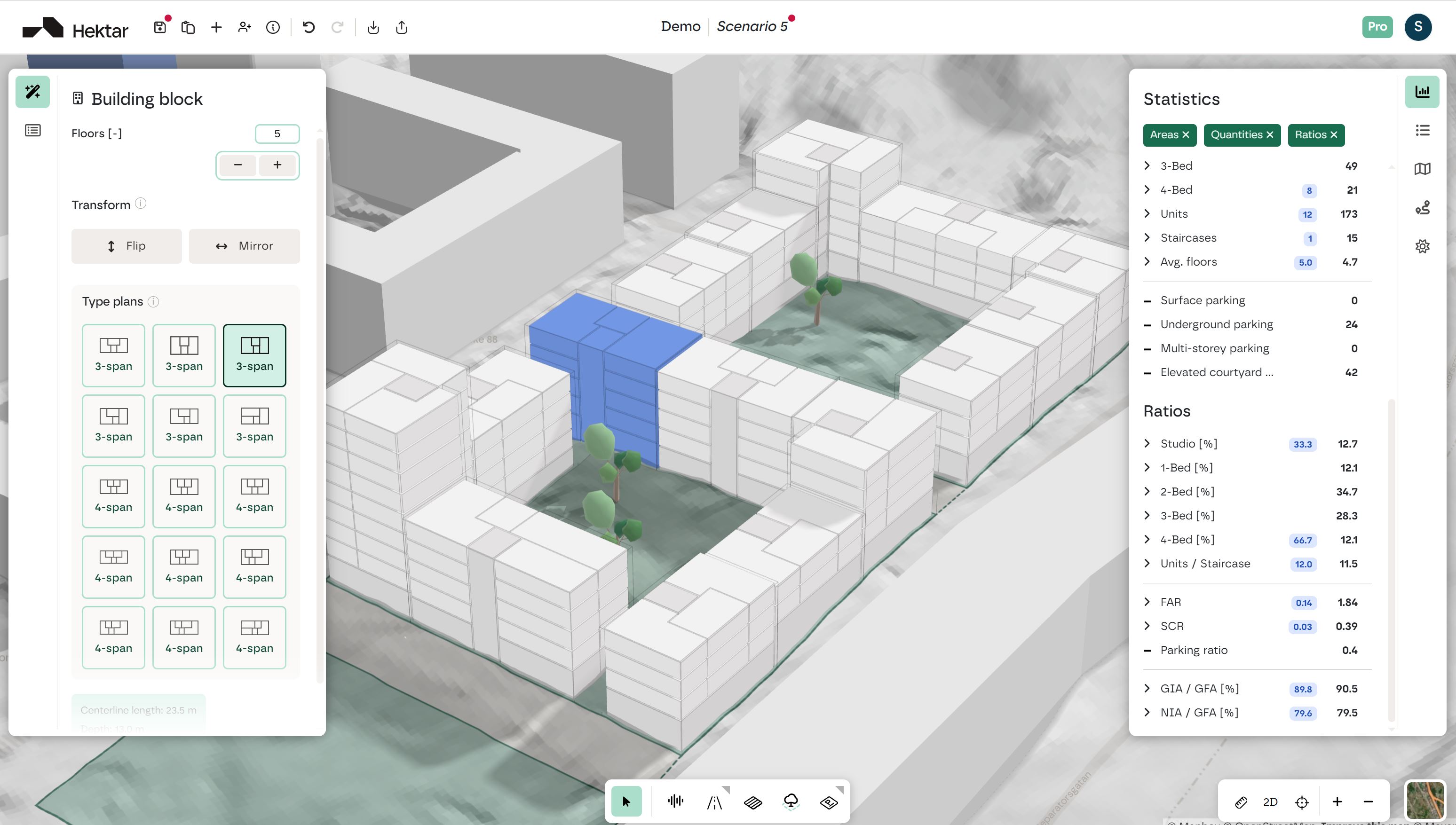
Recent advances ingenerative systems allow early-stage workflows to move from:
Manualsketch → singleoption → refine
to:
Input constraints →generate multiple options → evaluate → adjust → regenerate
This compresses risk earlier in the process.
Instead of committing to one direction and refining it, teams can explore a solution spacebeforecommitting. And this changes the economics of decision-making.
In episodic markets likereal estate development, the unit of value is not the user. It is the project.
Feasibility tools should therefore be:
Not engagement-optimized.
This is the lens through which modern early-stage tools are emerging.
Hektar is built specifically for early-stage feasibility in real estate development.
It enables:
Instead of modeling one scheme manually, teams can test multiple development scenarios inminutes.
The goal is not architectural finality. The goal is risk compression before commitment.
Early-stage feasibility is the most leverage-rich moment in real estate development.
It is where assumptions become geometry. Where geometry becomes numbers. And where numbers determine risk.
Tools thata ccelerate and structure this phase will shape how projects are evaluated in the next decade.
Not by replacing architects. But by enabling better decisions before design becomes expensive.


