
Articles
Urban Development
February 26, 2026

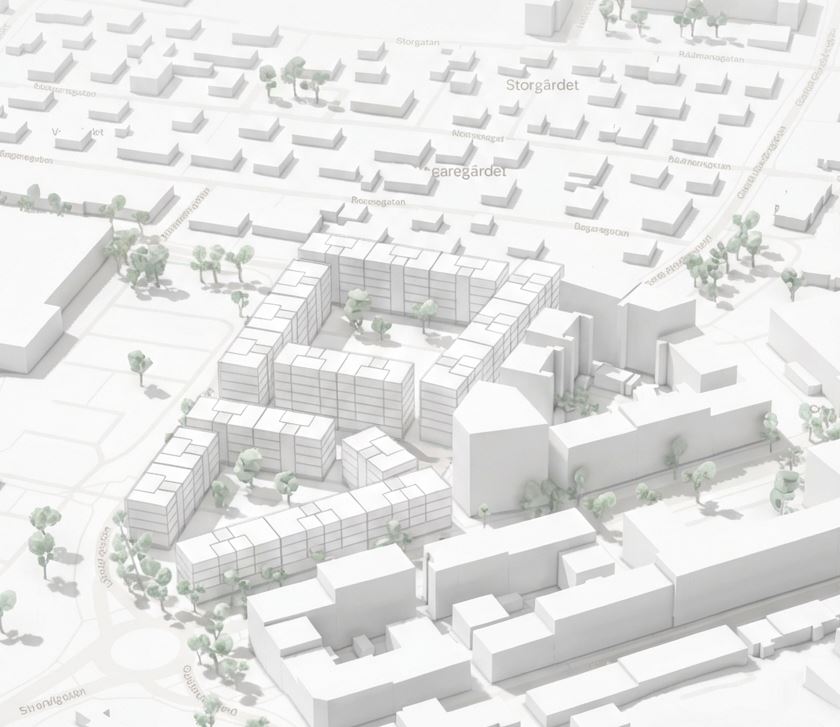

This article explains why early-stage feasibility is fundamentally about risk compression, and how structured generative workflows reduce uncertainty before capital is committed.
Real estate projectsrarely fail because of construction mistakes.
They fail because early assumptions were wrong.
Density targets.
Unit mix.
Height strategy.
Site coverage trade-offs.
Financial viability.
These decisions are madelong before detailed design begins.
This is the domain of early-stagefeasibility in real estate development - the phase where spatial and financial assumptions are tested before commitment.
In many developmentprojects, feasibility is handled manually:
This creates pathdependency. Once a direction ischosen, it becomes difficult to reverse.
The result is oftensuboptimal density, inefficient layouts, or hidden financial exposure.
Risk is not eliminated. It is simply postponed.
A structured feasibilityworkflow changes the sequence:
Instead of:
Single concept → refine → commit
The process becomes:
Define constraints → generate multiple strategies → compare → adjust →regenerate
This is where generative feasibility tools create leverage.
By testing fundamentally different spatial strategies early, teams can evaluate trade-offs explicitlyrather than implicitly.
We demonstrate this in a municipal case where three alternative development concepts were tested toreach 600 housing units under a strict 50% site coverage constraint in Eslöv.
See the full case study here:
Testing 600 Housing Units on a Municipal Site
Early-stage feasibilityis not about producing architecture.
It is about:
In episodic markets,speed and clarity at this stage determine exposure.
The earlier risk becomes visible, the less expensive it is to correct.
Risk compression is thereal objective of early-stage feasibility.
By structuringconstraints, generating alternatives, and comparing scenarios before commitment, development teams move from reactive refinement to proactive evaluation.
For a deeper explanationof the phase itself, read:
What Is Early-Stage Feasibility in Real Estate Development
For a concrete exampleapplied to a real municipal target, see:
Testing 600 Housing Units on a Municipal Site
That is how spatialiteration becomes strategic leverage.


